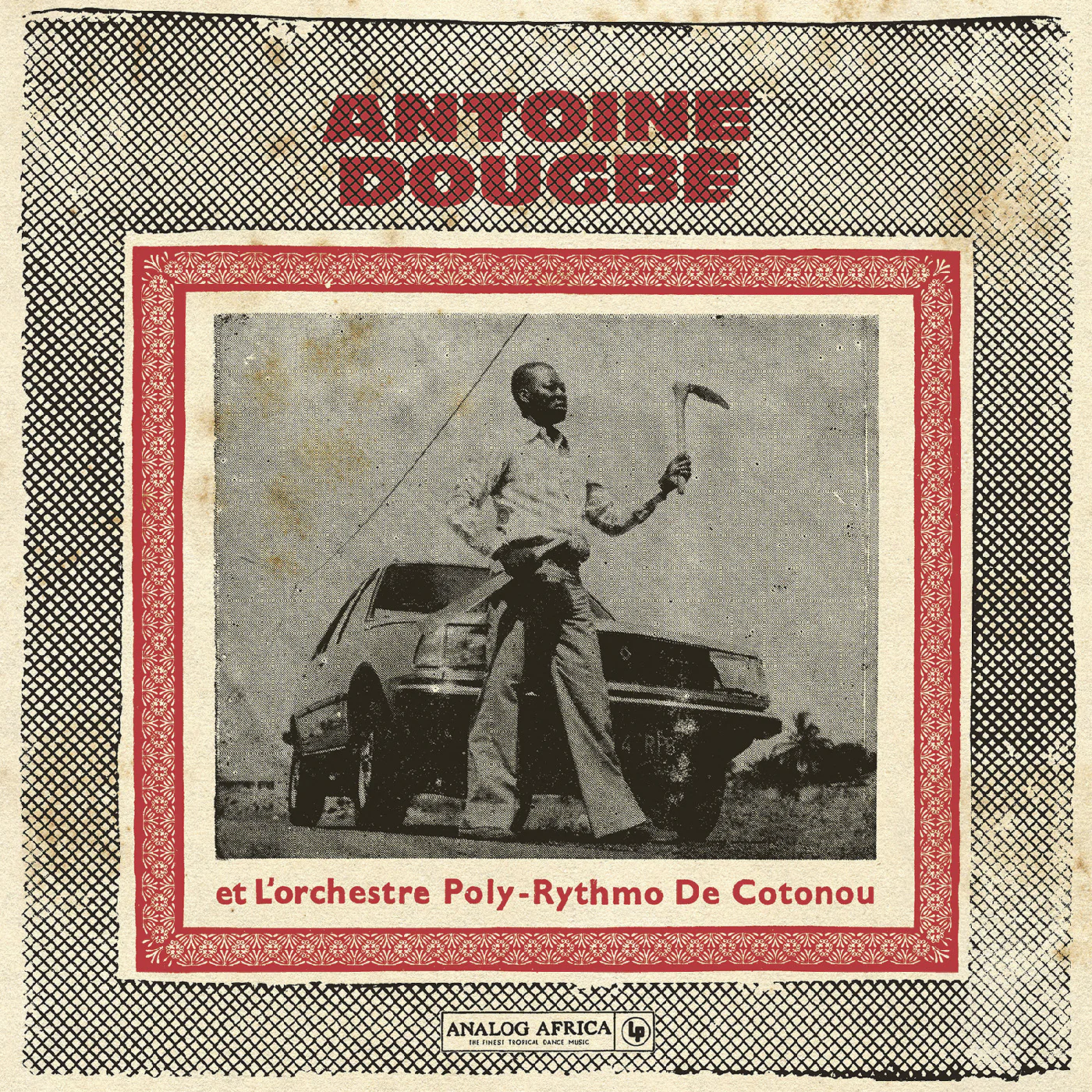
Antoine Dougbe et L'Orchestre Poly-Rythmo De Cotonou 2LP
Who was Antoine Dougbé? Even the most dedicated crate-digger might go their whole life without stumbling across any of the three LPs he released in the late 1970s and early ’80s. Yet all the musicians who happened to cross paths with him remember with a mixture of admiration and fear; for Antoine Dougbé was not merely one of the most inventive songwriters to emerge from the fertile music scene of Cotonou, but also a powerful Vodún initiate whose close connection to the spirit world allowed him to refer to himself as “the Devil’s prime minister.”
In Cotonou, a city that had established itself as one of the centres of the West African music scene, the young man found himself drawn to Cuban son and rumba. But his fascination with the traditional rhythms of Benin—especially those associated with Vodún ceremonies—allowed Dougbé to take his music in directions far removed from anything happening in the Congo.
Dougbé neither sang nor performed any of the main instrumental parts of his songs. It has been suggested that his involvement with Vodún—in which singing plays a crucial role in important rituals—effectively prohibited him from using his voice for anything as frivolous as a popular song. Whether driven by the thrill of the music or by fear of crossing the Devil’s prime minister, Dougbé’s records all feature Orchestre Poly-Rythmo playing at the absolute height of their considerable powers.
Dougbé released three LPs and a handful of singles under his own name, but never quite found the audience he deserved. By the early eighties he had vanished from the music scene.
Analog Africa now brings his small but extraordinary body of work to a wider audience with a double LP compilation featuring 12 songs, a whirlwind of circular guitars, synths, mesmerising layers of Afro-Cuban and Cavacha madness.
Product Information
Product Information
Shipping & Returns
Shipping & Returns
Description
Who was Antoine Dougbé? Even the most dedicated crate-digger might go their whole life without stumbling across any of the three LPs he released in the late 1970s and early ’80s. Yet all the musicians who happened to cross paths with him remember with a mixture of admiration and fear; for Antoine Dougbé was not merely one of the most inventive songwriters to emerge from the fertile music scene of Cotonou, but also a powerful Vodún initiate whose close connection to the spirit world allowed him to refer to himself as “the Devil’s prime minister.”
In Cotonou, a city that had established itself as one of the centres of the West African music scene, the young man found himself drawn to Cuban son and rumba. But his fascination with the traditional rhythms of Benin—especially those associated with Vodún ceremonies—allowed Dougbé to take his music in directions far removed from anything happening in the Congo.
Dougbé neither sang nor performed any of the main instrumental parts of his songs. It has been suggested that his involvement with Vodún—in which singing plays a crucial role in important rituals—effectively prohibited him from using his voice for anything as frivolous as a popular song. Whether driven by the thrill of the music or by fear of crossing the Devil’s prime minister, Dougbé’s records all feature Orchestre Poly-Rythmo playing at the absolute height of their considerable powers.
Dougbé released three LPs and a handful of singles under his own name, but never quite found the audience he deserved. By the early eighties he had vanished from the music scene.
Analog Africa now brings his small but extraordinary body of work to a wider audience with a double LP compilation featuring 12 songs, a whirlwind of circular guitars, synths, mesmerising layers of Afro-Cuban and Cavacha madness.